Wednesday, January 26, 2005

An Ambivalentist

I have long described my self as an ambivalentist when it comes to the existence of God. Before going further into what this entails, I should add here that I think the term is lacking in an essential way which I will get to at the end of this.

I should note here that the concept of God that I use here is from the Christian perspective. I was raised a Catholic and live in a country which is predominantly Christian, so the only concept of God I understand well is the Christian one.

I am an ambivalentist because it is my view that the existence of God should make no difference at all to how one acts in this life. If a person is a coward then the belief in God might make them refrain from evil and if a person is self-serving it might make them do good; to avoid Hell and obtain Heaven respectively. I hope and trust that my readers are neither cowards nor self-serving when it comes to how they live their lives. I also hope and trust that if God exists, he did not format the rules of life around the baser individuals who live among us.

A truly good person will do good for the sake of good and not because of any reward offered.

I have argued that in the absence of God, it is even more essential to be a good person: If I fail, if I succumb to temptation and there is a God then it is a tragedy for me alone. I assume here that God's good is infinite and therefore my own good which is finite does not add anything in terms of the global ratio between good/evil. If there is no God then my failure to do good means that the store of good in the universe is less than it would have been--there is a finite chance it is reduced to zero or less than zero (when evil is accounted for).

I often feel more comfortable around religious people than with atheists even though I (while not at all certain about it) don't think there is a God. I suppose the reason for this is that the religious and I share the belief that there is such a thing as good and evil and that there are severe consequences associated with how you act in this life. (What I think the nature of those consequences to be may be the subject of another posting)

So, getting back to the earlier point about why I think the term ambivalentist is lacking in some essential ways: It is great at expressing how I feel about the irrelevance of God when it comes to one's own choices in life. The question of the existence of God is very interesting from an academic standpoint. I would give much to know, with absolute certainty, if there is or is not a God. This aspect of the term is its large failing. If anyone out there has a better term, I would be interested to hear about it.

dbp Update: I didn't really mean to wait so long before making an update to such a loaded post, but things have been hectic... I am aware of the school of religious faith which posits that it is only through faith and scripture that it is possible to even know how to lead a good life. (I don't want to get into issues of religious fanatics: Atheist fanatics are just as bad and have killed at least as many innocent people). The evidence that I have seen from folks I know who do try and live according to the teachings of Christ, is that it appears to work: They have a sense of purpose, are living a good life and are happy. I do not consider this to be proof of the existence of the divine, only that there is nothing irrational about, nor counterproductive to having a belief in God.

Sunday, January 16, 2005

How to make a Christmas snowflake

I know that this (like my yet to be sent Christmas Cards) is a bit late to use. I was reminded of making these because now I am in the process of taking down our decorations. Here is how I make a snowflake: 1. Fold the paper: Fold a regular piece of 8 1/2 x 11 printer paper in half top-to-bottom. Then fold from left to right. One corner will represent the middle of the paper (m) and the opposite corner (o) will have all of the original paper's corners arrayed on top of each other. Fold down the edges (paper airplane style) such that a 45 degree angle is formed with the pointed part originating from corner (m). Repeat this process by refolding the flaps, so that you now have an angle of 22.5 degrees originating from (m). 2. Cut your desired shape: It should be noted that the edges of paper opposite from (m) are not all the same length. In order to assure that your snowflake is completly symetrical, you will need to trim the side opposite point (m). Other than this recomendation, let yourself go! The only cost of failure is a little time and one piece of printer paper. 3. Finish up: One should unfold a snowflake carefully. The cut-outs some times stick together a little, so be patient. I found that ironing completed snowflakes makes them less snaggy and allows them to hang better. dbp


Once the paper is folded as described above you can cut it how you please. I would estimate that about half of the paper is removed in this cutting process. Posted by Hello

Here is a view of the complete snowflake Posted by Hello

Saturday, January 15, 2005

Runners are not as fast as they used to be...

My previous post on performance fabrics got me to thinking about how my level of performance in the past would stack-up today. One might expect that with better shoes, diet and training regimens; runners could be faster today than they were in the past. I have only run one marathon and so my time is etched in memory: 3:18:23. Actually, I am not that petty: I ususally just remember 3:18 and some seconds--I looked up the 23 part. I decided to look-up the times and placements of the most recent Seattle marathon to compare my ranking with the ranking that time would produce now. My place was 646 out of 2101 starters (only 1743 finished) which means that I was in about the top 30% of those who entered the race. The most current results from 2004 show that I would have come in 188th out of 2277 finishers or about the top 9% of the field. More people are participating in the marathon now than in 1980 and yet there are far fewer really fast runners. The top runner from our group: Mike Hadway, came in 4th with a time of 2:25:54. He would have won the race in 2004 by over 3 minutes. In case one might think that conditions were more favorable in 1980, they were not! The 1980 race featured gale-force winds, rain and sleet. This may be part of the reason why 358 runners (17% of the starters) never finished the 1980 race. I could not find the weather information or the ratio of starters to finishers for recent Seattle marathons, but did look at top finishing times and they are similar from year-to-year. If any readers have a theory as to why performance level has declined over the years, I would be interested to hear it. dbp

Added: Malcolm Gladwell apparently agrees with me:

GLADWELL: It’s a great question. Impossible to answer in the time that I have, but if I can use my favorite subject of running as an example. If you look at times in the marathon today and compare them to times from 30 years ago, we are radically slower today. I’m not talking about the elite level, I’m talking about at the sub-elite level. The number of Americans, for example, who can break three hours in a marathon today is a fraction of what it was in 1980 or 1985. And that goes to this point: In order to extract running talent from the general population, you need to have a really, really broad base and the broad base is gone.

There is still elite running that produces really good, fast runners. But in 1980, there was this many people running the kind of mileage necessary to run a marathon properly, and today there’s this many. And all of our attention and focus is on the 95th percentile. But what we don’t understand is, we’ll never find the next great marathoner until we re-broaden the base. When we had a base this big of mediocre marathoners we had the two greatest marathoners in the world. Now that our base is this big, we got nobody in the top 10.

From an interview here

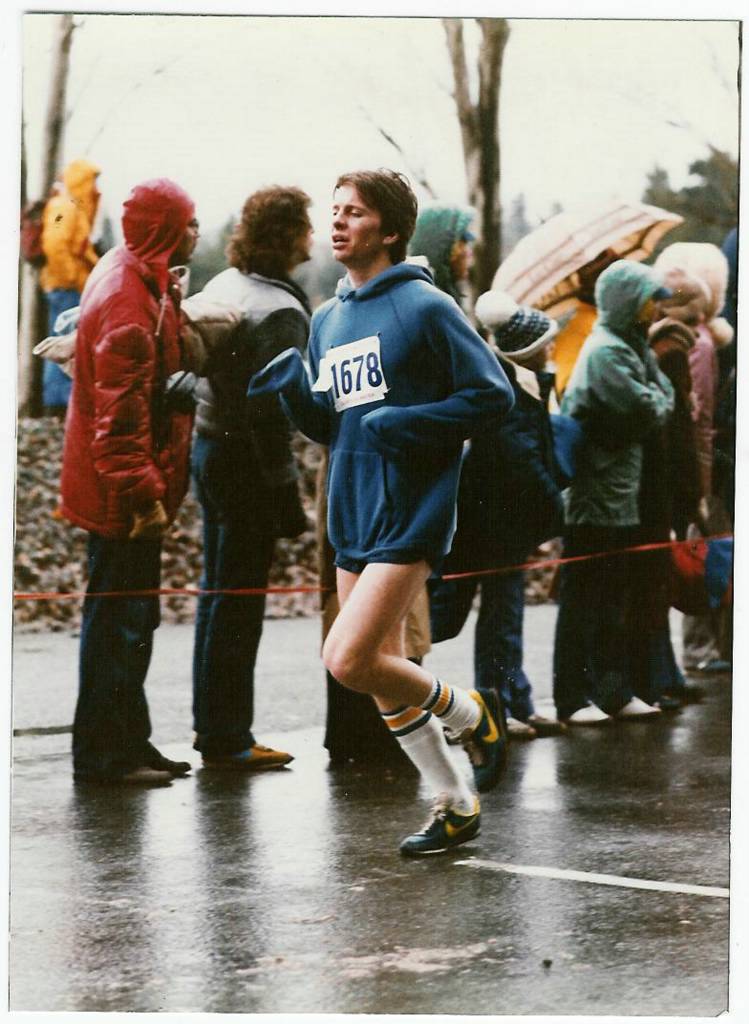
Seattle Marathon 1980

I had fallen from cramps in my calf just before this picture. Like a fool, I sped up as I got right toward the end of the race. There was more of a crowd there and it was slightly downhill. When my calves cramped I fell down, but when I got up and started to run again they recramped. I limp/ran across the finish line.
Here is a page from the Bloomsday Road Runner's Club newsletter. You can get a larger view by clicking on the image and then zooming in from there. I am the 2nd from the top of the list--which is not organised by placement. Posted by Hello

Friday, January 14, 2005

High Performance Fabrics

Here is the story of how I finally got good exercise clothes... For the last couple of years I have made a habit of going for a run during my lunch break. "Run" is a fairly charitable word for what I do. My slow trudge is an attempt to remain in shape in my old age. There is a shower in the men's bathroom at work and a small bank of lockers. A few months ago I found one of the lockers empty and with a key in the lock. I soon adopted it as my own and this saved me from hauling all of my stuff back and forth from my office to the bathroom. Earlier this week I discovered that the key was not in any of the places I keep it. (There are only two places, so this was not an involved search) I either keep the key in my desk or, if I accidentally bring the key home, I place it on my key chain so I will have it the next day. I had been running in cotton sweat pants and sweatshirt or sometimes a pair of cheap lined nylon running pants. They got wet and heavy in the rain, or I froze my n--- off when it was really cold--plus, they were ill-fitting and uncomfortable. I did not have a desire to wear such poor athletic-wear. It was just that whenever I went to general purpose clothes stores, all that was available was crap. I knew that good stuff could be found at a specialty store, but what I had was okay and I was too busy to waste half of a precious weekend afternoon out buying clothes. Of course, since I could not run without running clothes and mine were behind locked door...I spent my lunch hour visiting the nearby EMS store. I purchased two pairs of athletic pants: one heavy weight and one lighter, and a matching sweatshirt. They are thin, super soft and stretchy and best of all, they fit really well! The next day I looked forward to my run even more than usual. I normally look forward to it more as a break from work than for the pure joy of moving my body outside: When I was on the cross country team in high school, I enjoyed the act of running itself: I had lots of energy and my joints didn't ache, plus I was pretty fast. In this case, I was looking forward to trying out my new stuff. I was just as slow & achy as usual. No problem. I have long become accustomed to fancy gear refusing--against all expectation--to turn me into Superman. On this foggy cold (45F) day, I was gloriously comfortable and warm--but not too warm. My God! It was actually a PLEASURE to run! I should loose my key more often.

Wednesday, January 05, 2005

Correspondance re Wood heating

Email from a friend...re first post I am with you with wrappings. I feel so guilty about them. Actually, not just presents, but everything.I remember when I was a little boy my mother always carried a shopping bag made of some cloth. Nowadays in Japan, grocery stores encourages customers to bring their own bags,but most of the time, it is forgotten. Also my kids' favorite restaurant - McD's. Everything is used only once and gets thrown away. Where we live in Tokyo, garbage collection is very tidious - we have collection every day, but we must separate paper, plastics, non-burnables, recyclables, etc., etc. (I do not knowthe details for Susan does it). We must cut open the milk cartons and wash them and recycle at grocery stores. These are really pain in the butt - however, I think we mustreally be careful about not polluting...as much as possible. We had record number of typhoons hit us last year. Very unusual heat in summer and unusual storm in winter. I thinkthis is all due to humans messing with the nature too much. But, you have to realize that the US emits over 1/3 of all CO2 made in the globe. If the Americans do not start doingwhat we do, it does not matter how much the Japanese and Europeans saves. Do you know that your country is practically the only one that is not signing the Kyoto Protocol(http://unfccc.int/resource/docs/convkp/kpeng.html). Even Mr. Putin signed it recently. S. fell in love with the idea of wood stove when we lived in Utsunomiya (100 km up north from here). Her friend had it and she decided it was very wonderful and must have it. As she wrote in the Christmas card, we are getting our house face lifted. I think the room in which we will be installing the woodstove will be done in March, so we won't be able to enjoy it until next winter. We may not cook things inside it, but we will definitely use it toheat water (which will keep the house with humidity) and probably dry wet things so I don't have to feel too guilty about geopardizing the CO2 emission.By the way, you live in the vicinity of Boston? If so, then maybe we can get together when I visit it next time. Cheers, Tadahiro Here is my reply... If you do get a wood stove, you can run it guilt-free. Firewood comes usually from forestry waste: The wood which is not suitable for lumber or paper would either be burned or would rot on the ground. Either way the carbon ends up in the atmosphere. Of course, it is not as if you would leave your house cold--anything you heat with will put carbon into the air. (Except for electric when it is generated from nuclear power plants.) Concerning carbon: The figures I have seen are that the USA contribues about 25% of global carbon--http://cdiac.esd.ornl.gov/trends/emis/tre_nam.htm which is about in line with our share of global gdp. This does not take into account the carbon we are currently impounding due to the reforestation of the Eastern half of the country. Before modern transportation, almost all of the land in this part of the country was cleared and farmed--even though the land and climate are not very good. Now we get our agricultural products from the great plains or from overseas and the Eastern farms are abandoned and returning to forest land. This reforestation is sequestering millions of tonnes of carbon per year. It is certainly the case that [CO2] has been increasing in the last 100 years. What is less clear is how this will effect our planet. It may be that this bit of extra carbon is currently staving-off the next ice age (which is due about now) It is also possible that increased CO2 is what causes ice ages--we do not know. What seems most practical is to continue to research the issue and take no action untill we are sure it is the right action. Recycling for us is not too much of a problem--everything goes in one bin. Cardboard is just a hassle since the pieces are always too big to fit into the bin and have lots of bulk and angles. If your wood stove will be ready next winter, now is the time to start >laying-in fuel: If you are doing remodeling, the wood construction scrap makes excellent kindling for starting fires. If you have trees on your land that have fallen or need to be thinned, that is a good source of fuel and the wood will need the time to dry out. Best regards, dbp

Tuesday, December 28, 2004


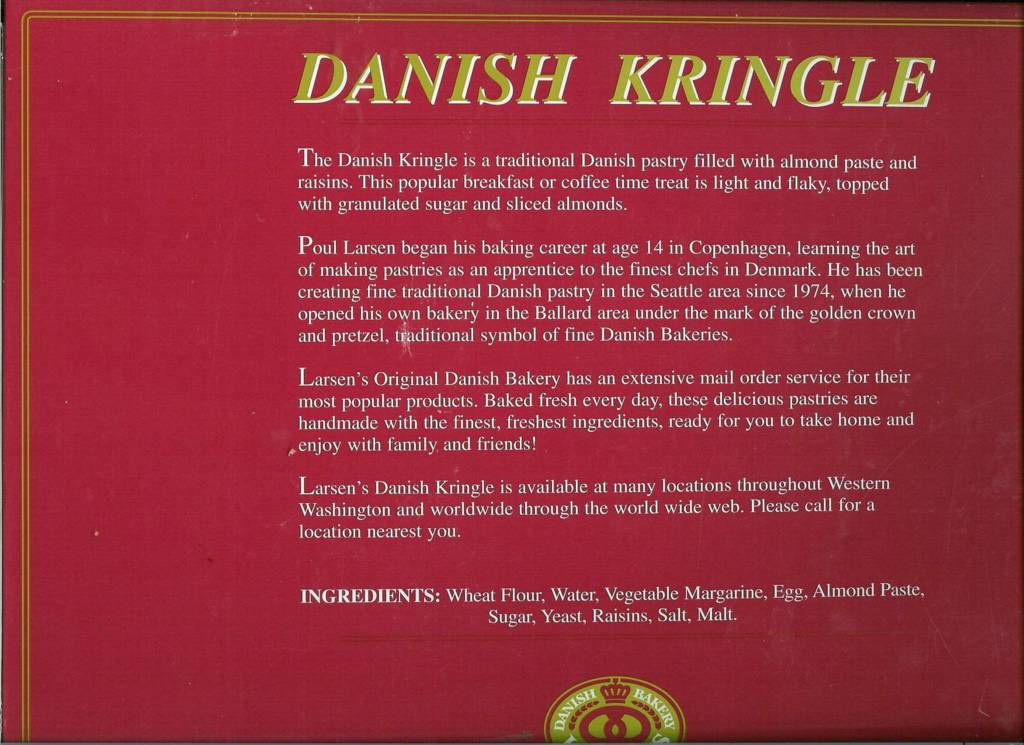
Here is the back of the Kringle box--full of handy information. Posted by Hello

This is the front of the Kringle box. Posted by Hello

Here is our Christmas card, which we still haven't mailed out. Posted by Hello

Monday, December 27, 2004

Christmas notes

--We had, as usual, prime rib roast for Christmas dinner. This year I dry aged the roast for two weeks prior to cooking it. It was num-nummy and I look forward to plentyfull french-dip sandwiches between now and New Year's day.
--Santa left a very nice note for the girls, who left him some healthy snacks of seltzer water and carrot sticks. I don't have the note in front of me, but lets see if I can remember what it said...

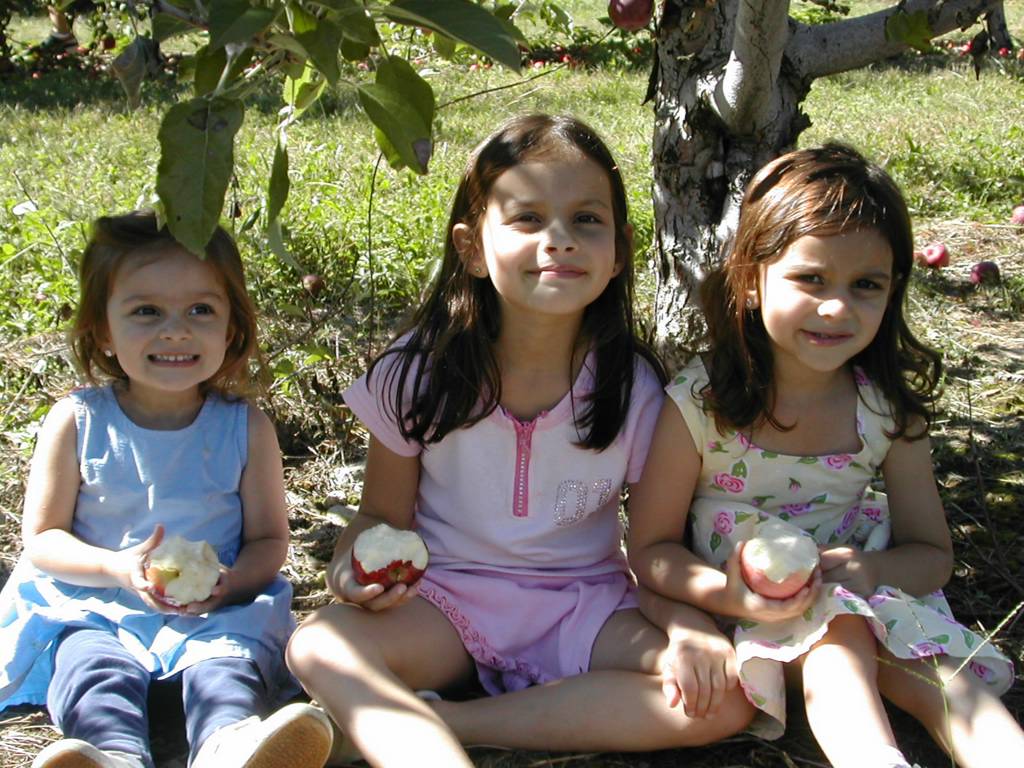
Dear Pecchia orphans (crossed out), girls; Jemma, Dahlia and whats-her-name (crossed out) Surenna. Thank you for the healthy snacks. Please enjoy your Christmas gifts and be good in the coming year--I am watching! Love, Santa

--We had lots of guests for dinner (lucky 13) Our immediate family of Wife and three kids (5), my wife's parents (2), Hemma, a close family friend and distant relative (1), Wife's uncle on her mom's side's family: Uday, Joythi, Rohan, Aditia and Joythi's mom Vijaya (5).We had them all over for the night before Christmas and all five children stayed at our home. The next night only Jemma stayed with us and everyone else stayed at our in-law's house (about 8 miles away)
.....................................................................................................................
--People complain about all the wrapping paper associated with Christmas giving, but the real problem is cardboard and plastic. The paper wads up fairly compactly and is soon out of the way. The boxes and molded plastic packaging is very bulky and difficult to break-up. This year I burned all of this in the fireplace. The ash from boxes isn't too bad (I use it on the driveway for traction when there is ice) and the plastic and styrofoam leaves no residue at all.
...................................................................................................................
--We recieved many wonderful things for Christmas, but one which was very special was a Kringle sent by the author's sister Carol. There is a whole story here:
The Kringle itself is a pretzel-shaped pastry about one foot wide, eighteen inches long and about 3/4 inch deep. It has a flaky buttery texture and is filled with marzipan. The whole thing is presented in a decorative box which (if memory serves) is mostly red and gold.
We first had this confection when we went to visit V's brother Nithin and his wife Kerry who live in Seattle. (They live in a cute little house about a mile north of the Ballard locks.) Around the corner from their home is a little bakery where the Kringle is a specialty.
When we visit the Seattle area we have a lot of people to see, we usually visit at least the following: There are the family's of two sisters of this author and his parents usually make the trip over from Spokane when we are around--since we are comming all the way from the Boston area. The author's ex-cousin and former college roomate in Tacoma and his wife, as well as V's graduate school chum Khisty and her husband Mike and children Maxwell and Dagney. When we visited these people and others, we would get together for lunch or dinner or just coffee and we always took along a box of kringle for dessert. In every case but one, where our hosts either wanted it all for themselves or (most probably) were too distracted by their young kids to pick up on our copious hints, we had kringle. On our trips to Seattle we would have this pastry every day and never did tire of it. So it was a special treat to have a bit of this tasty memory this christmas.

Saturday, December 18, 2004

Lemmony Snicket Movie

Two Christmases ago my brother-in-law and his wife sent Surenna the first 9 books in Lemmony Snicket's Series of Unfortunate Incidents. It took about a year to read all of them to her and was quite enjoyable for both of us. Surenna would ask pleadingly for another chapter at the end of most nights of reading so if it was a weekend and if my voice was not shot I would sometimes comply. I don't want to get into a book review, you can find plenty here. What I liked about the books was that they present the world as a place where bad things can and do happen, which is true about the world but not so much in evidence in most children's literature. Another pleasant aspect of the books is that the heroes of the stories are kids who by being kind, resourcefull and loyal to each other get through all the hardships put in front of them. All good lessons for kids. The books evoke a world which is much like the actual world, but warped in amusing ways and include lots of clever humor which only adults will get. So, on to the movie... We took our eldest two girls (7 & 5) to the movie. There were some intense moments when Dahlia (5) was really scared and she was a bit restless by the end of the film. The dark look of the film and the odd style of cars, buildings and technology fit well with the tone set by the books. Count Olaf--the nemesis of the Baudelaire children--occupied more screen-time than one would have expected from the books. In the books he is at the center of the plot in the sense that he sets up the framework of what the children have to overcome, but then most of the action centers on the children's efforts to extricate themselves from the situation. Had the film followed the structure of the books then this film could have been based on only one of the books rather than on plot highlights from the first three books. Jim Carrey was made for the role of Count Olaf and the little girls who played Sunny steal the show with their cute babblings. Adults will enjoy this film as will children who have read or been read these stories. The film may be too intense for children under 5 or kids who are high-strung.

Thursday, December 16, 2004

Since you've got the wood stove going, why not cook with it

You might find that once you have a wood stove and a pile of wood ready to burn, that your plan of just heating with wood on the coldest days or weekends flies out the window. If you are at all like me, you would never keep your house at 75F if you were heating it with oil, gas or electricity. The guilt about wasting money would take all the pleasure out of lounging around the house in pajamas when it is -20F outside. If you cut your own cordwood from your own trees on your own land, it is a completely different story: As long as you are sure you laid-in plenty of fuel to get you through the winter, you will keep the stove stoked and the house warm. The physics of running a stove mitigate for running the thing hot and never letting it go out: First, you burn up a fair amount of fuel just getting a good fire lit and getting the chimney hot etc. Plus, kindling is the most labor-intensive fuel (more splitting). Second, once you have a really hot fire more of the incoming air is involved with combustion and thus less warm room air is pumped out of the chimney. A hot fire seems to need less fiddling with--you just toss a log in and it disappears. When you have a cool fire, you have to adjust the logs a lot and the fire makes more smoke. Because of all the above, you may find that your stove is running most of the time and is especially hot around time for making dinner. Even if you let it go out during the day, once you are home from work the first thing you will do is get the stove going. Be quick about it. Don't let the dreaded furnace come on and start burning dollars! Anyway, you have the thing running in the evening--so why not use it to cook with? Finally to the subject of this posting --We found that when the stove was good and hot, that we could boil water in about the same amount of time on the wood stove as on our electric range. So boil potatoes, pasta or steam anything on the stove that you would put onto the range. --We did fry and saute with the stove and it works fine, but there is a certain amount of splatter so I don't recommend this unless you don't mind how your stove will look: Blacked steel is the most common finish on stoves and it is kind of a mess, although not hard, to reblack a stove. I imagine that enameled stoves would be easier to clean. Cook inside the stove! Yes, the best cooking is done inside your wood stove! --Most often the exhaust pipe goes out the back of the stove but when you look inside the firebox you don't see it. This is because there is a diagonal plate of steel which is lowest in the back of the fire box and ends somewhere toward the middle of the firebox. I don't know the exact reason for this baffle but I suspect that it forces the flame to circulate inside of the stove rather than heading strait for the exit pipe. If the flame spends more time in your stove and less heading up the chimney, it gives off more heat. I point out this baffle since we used it to help us cook inside the stove. We would hang our food on skewers and hooks suspended from the upper lip of the baffle. If your stove doesn't have quite this design, I am sure that you will be able to improvise something which does the same thing--this is not rocket science. You can cook steaks, chops, sausage, whole or pieces of chicken and small roasts by just hanging them up inside the wood stove. First, you need to have the right kind of fire: The lack of flame is essential! Let the fire burn down 'till there are coals only. For steaks and chops you can leave some coals below the food, which will char the surface nicely. For more slow cooked items like whole chicken or small roasts, sweep the coals to the sides and hang the meat in the middle. You can bake potatoes the same way. The food will take much less time to cook than it would in your oven! There will be some trial and error involved. We cooked whole chicken in about 25 minutes, steaks in 5-8 minutes, chicken wings in 12 min and baked potatoes in about 20 min. You can make your own skewers out of coat hanger wire: You will get 3-4 hooks/standard hangar. Please pre-cook the hanger hooks before using with food as they are often coated with some kind of varnish or paint. An hour in the wood stove will clear that up. When you use your wire hooks, please clean them by hand--the dishwasher will turn them into a pile of rust. Steaks cooked by this hanging method will be different from what you are used to: A well-done steak will be much less burnt looking on the outside than one cooked in the standard way and will be more juicy and tender on the inside. The reason is that all the cooking is by radiant heat and hot air, not by being in contact with hot metal. Aside from saving on gas or electricity from using your wood stove to cook there are a couple of other advantages: First, there is some fun and adventure to this kind of cooking. Second, you can have the flavor of bbq in the dead of winter when your grill is covered in snow. The best reason for cooking in the stove is the cleanliness of it. The skewers and hooks are a lot less to clean up than broiling pans and grill racks. All the smoke and cooking smells go up the chimney instead of inside the house. We currently live in a house which is ill suited to wood stove heating and indeed lacks a stove. We do a lot of grilling year-round in the fireplace where we have a little Weber hibachi. We can enjoy grilled salmon in the dead of winter without stinking up the house.

Wednesday, December 15, 2004